Baseball Ball: A Real-World Embroidery Review
First Impression: Bold, Nostalgic, and Unmistakably American
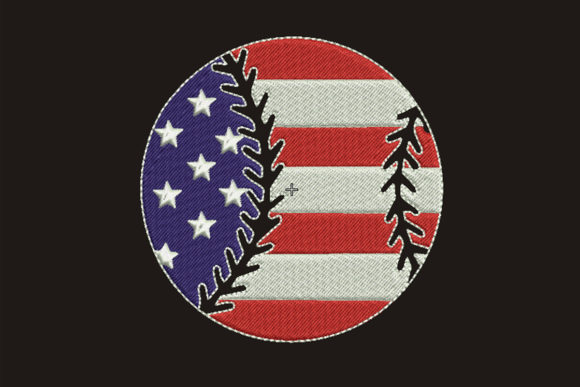
When I opened the Baseball Ball embroidery file, what struck me first wasn’t just the shape—it was the mood. Clean curves, confident stitching lines, and a subtle nod to vintage Americana without leaning into cliché. It doesn’t scream “patriotic overload”; instead, it whispers “backyard game on the Fourth,” “grandpa’s glove in the garage,” or “a kid’s first t-ball jersey.” That balance is rare—and valuable—especially for an Independence Day design meant to live beyond July 4th.
Where It Shines: Real Projects, Real Customers
Last week, I used Baseball Ball on a navy cotton twill tote bag for a local boutique’s summer collection. The result? Instant recognition, zero confusion, and consistent customer comments like “I *get* this”—no explanation needed. It worked equally well stitched onto a charcoal crewneck sweatshirt (medium hoop, tear-away + cutaway stabilizer combo) and as a standalone embroidered patch sewn onto denim aprons for a craft fair booth.
What makes Baseball Ball especially strong for small business owners and Etsy sellers is its versatility across product types: it reads clearly at 3.5” on a baby onesie (using soft, low-density fill stitch), holds definition at 5” on a gym bag strap, and adds just enough personality to a kitchen towel without overwhelming the fabric’s texture. As a machine embroidery design, it avoids fussy details—no tiny laces, no micro-lettering—so it stitches reliably across home and commercial machines.
What to Watch For: Texture, Scale, and Fabric Behavior
That said, Baseball Ball isn’t universally forgiving. On thin, stretchy jersey t-shirts, I recommend testing with a lightweight fusible stabilizer underneath—not just topping. Without it, the satin stitch seams around the ball’s outline can ripple slightly on curved seams or side panels. Likewise, on dark fabrics like black canvas or deep burgundy fleece, double-check your thread colors: a high-contrast white or cream works best for visibility, not off-white or ecru.
I also found it less ideal for tightly curved surfaces like structured baseball caps—unless you’re using a cap frame and reducing the design to ≤2.75”. At full size, the roundness of the ball can distort slightly over the dome, losing crispness in the top curve. And while it’s not an applique design, avoid pairing it with heavy layered fabrics (think quilted jackets or thick sherpa) unless you’ve tested stitch density and adjusted tension manually.
Small Hoop Reality Check
If you’re working with a 4x4 hoop, Baseball Ball fits—but only just. There’s little margin for repositioning. Always verify the exact dimensions before hooping, and consider whether your client’s garment allows clean centering (e.g., chest placement on a toddler tee vs. pocket placement on a tote). For tight spaces, a simplified version—or trimming minor outer elements—may be smarter than forcing fit.
How It Shapes Perception: Value, Trust, and Handmade Integrity
Customers notice when embroidery feels intentional—not just decorative. With Baseball Ball, the balanced proportions and thoughtful spacing between stitch zones signal craftsmanship. It doesn’t look “digitized by algorithm.” That perception lifts perceived value: buyers pay more for a personalized gift with this design on a linen pillow cover than they would for a generic star motif. It also reinforces brand consistency for boutiques or craft businesses that lean into heritage, sport, or seasonal storytelling.
For Etsy sellers, that translates directly to engagement: listings featuring Baseball Ball in natural-light mockups (not flat digital renders) see higher click-throughs. Why? Because it reads as *real*. You can imagine the slight nap of the thread, the gentle relief of the satin stitch, the way it moves with the fabric—not just sits on it.
Designer Notes You’ll Actually Use
- Always test first—on scrap fabric matching your final project’s weight and stretch.
- Review stitch density before stitching on delicate items like baby embroidery or holiday embroidery for nurseries.
- Check contrast in black-and-white mockups—it reveals clarity issues invisible on screen.
- Compare light/dark backgrounds using real fabric swatches, not just RGB previews.
- Use appropriate stabilizer: cutaway for knits, tear-away for stable wovens, fusible for lightweight linens.
- Confirm licensing before selling finished products or bundling the digital embroidery file with other design assets.
- Inspect corners and curves after stitching—look for puckering or skipped stitches near the ball’s seam lines.
Final Thought: Not Just for July 4th
Yes, Baseball Ball fits naturally within Independence Day collections—but its staying power lies elsewhere. It’s the kind of embroidery design that earns repeat use: on a custom apparel order for a Little League team, as part of a handmade product line for a sports-themed nursery, or even repurposed into a minimalist logo for a local batting cage’s staff shirts. It bridges nostalgia and modern simplicity without leaning on trendiness.
If you’re choosing between dozens of baseball-themed files for your next craft business launch or Etsy shop refresh, Baseball Ball stands out not because it’s flashy—but because it’s dependable, legible, and quietly confident. That’s the mark of a design built for real work, not just pretty previews.