Flower Leaf Border: A Thoughtful Stitch for Real Projects
As someone who’s stitched hundreds of borders across apparel, baby items, and boutique home goods—then shipped them to real customers—I approached Flower Leaf Border not as another digital file, but as a potential teammate in my next project. I pulled it up on my embroidery software, then printed a mockup for a custom linen tea towel I’m prepping for a local kitchenware pop-up. That’s where this review starts—not in theory, but in fabric, thread, and intention.
First Impressions: Sweet, Not Cloying
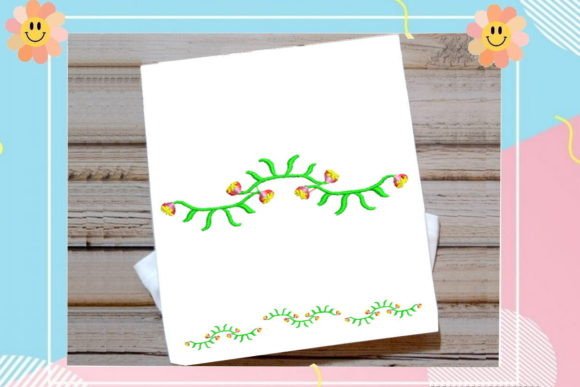
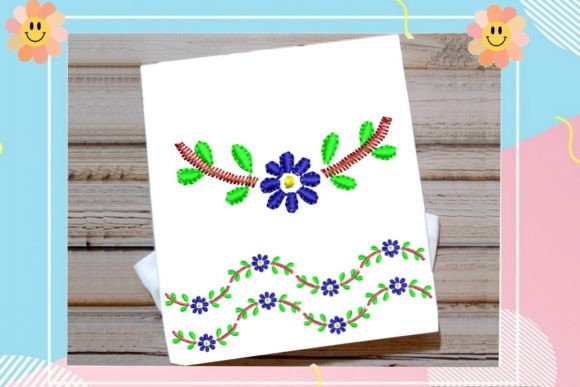
The moment you preview Flower Leaf Border, it reads as quietly confident—not fussy, not minimal, but balanced. It’s a continuous motif with soft curves, open negative space between leaves, and gentle floral accents spaced just far enough apart to breathe. There’s no heavy satin stitch overload or dense fill that might buckle lightweight fabric. Instead, it leans into rhythmic repetition with subtle variation—some blossoms slightly larger, stems tapering naturally. That’s what makes it feel modern: restraint, rhythm, and botanical warmth all at once.
This isn’t a border that shouts. It whispers “handmade care” — ideal for a baby onesie hem, the cuff of an organic cotton apron, or the edge of a linen pillow cover meant for a calm, curated nursery. It doesn’t compete with bold graphics or text; it frames them. That’s rare—and valuable—for Etsy sellers building cohesive collections or small shops curating seasonal product lines.
Where It Shines (and Where It Asks for Attention)
I stitched Flower Leaf Border on three test pieces: a medium-weight cotton tote, a loopback cotton sweatshirt, and a delicate rayon-blend tea towel. Here’s what stood out:
- On structured, stable fabrics—like canvas totes, denim jackets, or linen pillow covers—it held crisp definition. Stems stayed slender, petals retained shape, and the overall flow felt intentional, not pixelated or rushed.
- On knit or stretchy fabric—like a crewneck sweatshirt—I layered tear-away stabilizer underneath and topped it with light cut-away. Without that support, the leaf tips blurred slightly during stitching. The design isn’t overly dense, but its fluid lines need stability to land cleanly on give-y surfaces.
- On dark or textured backgrounds—say, charcoal terry cloth or nubby oatmeal linen—the contrast mattered more than I expected. I tested two thread palettes: soft sage and cream (subtle, elegant), and deep olive with ivory (higher impact, still quiet). Both worked—but only after checking how the fill stitches registered against the grain. On heavily textured fabric, I avoided placing it over seams or high-relief areas where the hoop couldn’t sit flat.
It’s also not a one-size-fits-all hoop design. While it scales well, I wouldn’t push it into a 3" x 3" hoop without verifying detail retention—especially those slender leaf veins and petal edges. For caps or curved surfaces, I’d recommend using it as a side or back accent rather than wrapping fully around a crown, unless you’ve confirmed your machine handles tight-radius hooping smoothly.
Real-World Fit: From Personal Gifts to Shop Inventory
Last week, I used Flower Leaf Border to frame a monogram on a set of organic cotton burp cloths for a new mom client. The border softened the formality of the lettering while keeping the piece refined—not too precious, not too casual. That duality is its quiet strength.
For craft business owners: this border works especially well as a consistent visual signature. Imagine it tracing the top edge of every tea towel in your Etsy shop, or framing the label on your handmade aprons. It builds brand recognition without needing a logo—just a repeatable, tasteful rhythm.
For holiday or wedding gifts? Yes—but thoughtfully. On a white cotton blanket, it reads serene and timeless. On a red-and-green holiday towel? Swap thread colors to moss green and warm cream instead of traditional red/gold, and it stays elegant rather than thematic. That flexibility means fewer seasonal redesigns and more repeat use across your digital embroidery file library.
Design Integrity & Customer Trust
Customers don’t see stitch files—they see finished products. And they notice when a border looks digitally slapped on versus thoughtfully integrated. Flower Leaf Border avoids the “clip-art” trap because its spacing, scale, and line weight suggest human curation. That translates directly to perceived value: a $48 embroidered pillow cover feels worth the price when the border flows like part of the design—not an afterthought.
It also supports trust. When buyers see clean, even satin stitches and no skipped details—even at corners or transitions—they subconsciously register quality control. That matters most for personalized gifts and boutique merchandise, where word-of-mouth hinges on unboxing moments.
Practical Designer Notes Before You Stitch
Before committing to a full run—whether for your own handmade product or a client’s custom apparel—here’s what I always do with a new border like Flower Leaf Border:
- Run a test on scrap fabric *identical* to your final material—including stabilizer layers.
- Check thread color contrast in natural light—not just on screen. What looks soft on a monitor can vanish on oatmeal linen.
- Zoom into the digitizing: Are small leaf tips fully stitched, or are they relying on running stitch “tails” that may fray? (This one uses short satin segments—clean and durable.)
- Preview it in black-and-white mockups. If it loses legibility there, reconsider placement or thread choice.
- Confirm licensing terms before selling finished items or bundling it into digital design assets. Not all embroidery files allow commercial use out of the box.
- Ask: Does this enhance the product’s purpose? A busy kitchen towel needs clarity—not decoration that competes with function.
Bottom line? Flower Leaf Border earns its place in a working designer’s folder—not because it’s flashy, but because it’s reliable, adaptable, and quietly expressive. It’s the kind of border that makes a simple tote bag feel like a gift, a baby onesie feel like heirloom care, and a small shop’s lineup feel intentionally designed. That’s not just stitching. That’s storytelling—one leaf, one petal, one thoughtful stitch at a time.